
Finding Roseville Residents
No single public household roll covers Roseville. Ramsey County property data helps when a name or street points to a parcel. MapRamsey then adds address, parcel, postal-city, and map context. Someone with no property tie may still surface elsewhere. Court indexes, historical directories, marriage records, and the permitted voter-record process each answer a narrow question, so save the spelling, address, date, and source rather than treating one match as final.
Lead with your strongest fact. An address often outlasts a surname. Initials, prior names, and business entities blur older records. A name plus a birth date serves an official registration confirmation or court search better. For a past Roseville household, move from the modern parcel to deeds, then to directories, census material, newspapers, and local-history collections.
- Use the Ramsey Beacon property search by address, owner, PIN, or plat, block, and lot.
- Open MapRamsey to confirm the situs address, parcel identifier, and adjoining map context.
- Check MNVotes only as an exact registration confirmation, not as an open resident list.
- Follow recorded parties through RecordEASE, then move to library and archive sources for earlier occupants.
- When public data is not online, use Ramsey County's written or portal-based Data Practices request route.
Roseville Records Offices
Roseville belongs to Ramsey County, whose seat is Saint Paul, and its recorder, assessor, election services, vital-records staff, and Second Judicial District each keep a different piece of the resident record trail. The Roseville street directory follows that address chain in depth. The useful distinction is simple. An assessor record ties an owner to a parcel. A recorder index ties parties to documents. A registration confirmation answers only a narrow election question.
Ramsey County Assessor
Parcel value, classification, owner, and address evidence.
Ramsey Court Records
District Court files, copies, and public terminals.
Roseville Parcel Clues
Beacon accepts searches by plain text, advanced address, PIN, or plat, block, and lot. Its map supports click and rectangle selection. Results can be customized or downloaded. A record can list an owner name and a mailing address. Treat that mailing address as a contact point only. It does not prove the owner lives at the Roseville property. That limitation matters when a search starts from a house rather than a verified resident.
The official guide caps advanced searches at 2,000 results. Custom columns, Excel output, and address labels are all described. A wide request can still aid property research. But the output is parcel and mailing data, so it cannot establish every person present at an address, and that distinction keeps an owner record from being mistaken for a household roll.
| Beacon option | Useful Roseville question |
|---|---|
| Address | Which parcel matches this situs address? |
| Owner name | Which county parcels carry this owner name? |
| PIN | Which record matches a known parcel identifier? |
| Plat / Block / Lot | Which legal subdivision record fits an older deed? |
| Map selection | Which parcels sit around a known location? |
Note: A tax mailing address may sit far from Roseville, and neither a parcel card nor a mailing label lists every person at the property.
Mapping Roseville Addresses
MapRamsey is the county viewer for streets, parcels, owners, subdivisions, districts, and civic sites. Its Results workflow works from an area or buffer. The attribute-table route has separate export controls. Use the parcel link to bridge a map result to owner detail, and confirm any name through the proper record rather than assuming a map label describes everyone at an address.
The primary-address layer is the standout. It flags residence status, mailable-address status, active or retired status, postal city, ZIP, ParcelID, and source. Those fields describe the address record. They do not turn the layer into a resident roster.
See the county's MapRamsey manual before using selections or exports.
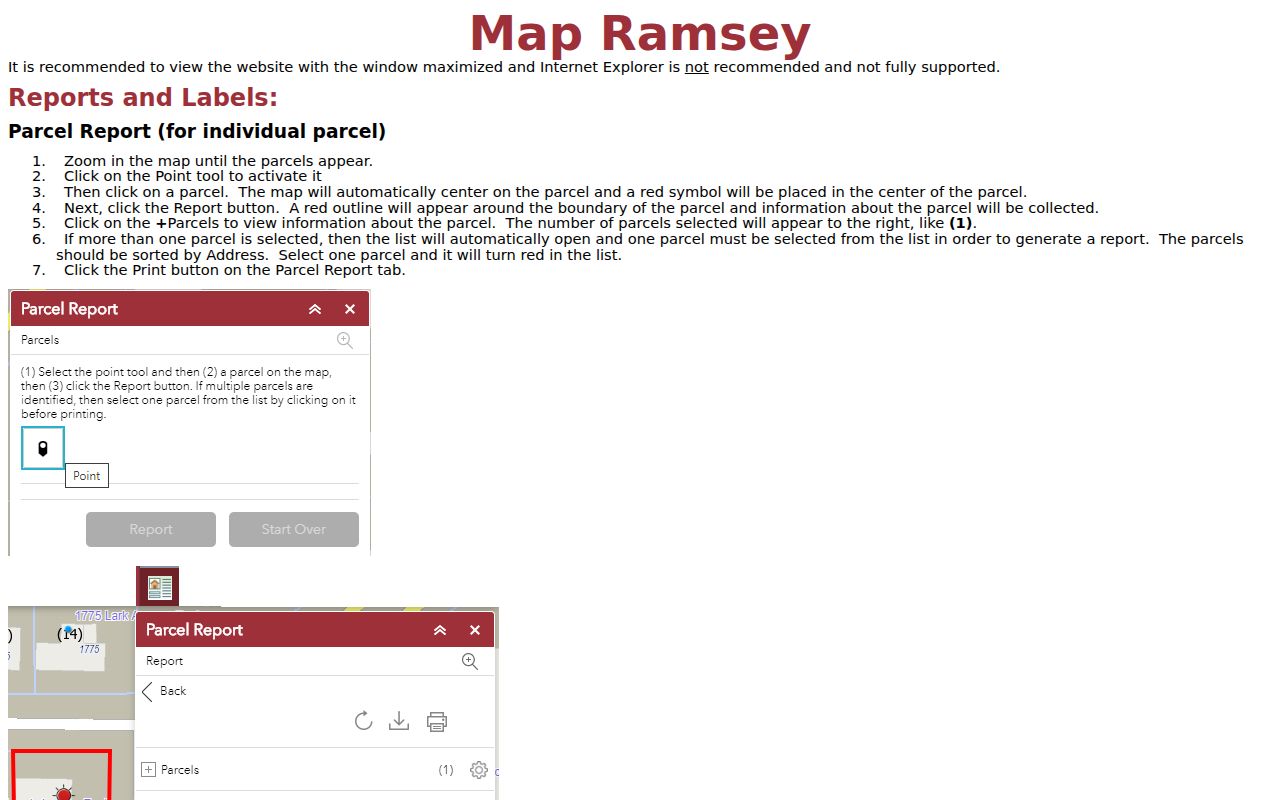
The viewer's layers and selection tools make it a strong starting point for any address. A selected parcel still needs a record-specific follow-up.
- Parcel
- A county-defined land unit with a PIN or parcel identifier.
- Situs address
- The physical property address, distinct from an owner's mailing address.
- Legal description
- The plat, lot, block, or other land description used in recorded documents.
- Index
- A finding tool that points to a record; it is not always the image itself.
Roseville Deed Trails
The Ramsey Recorder preserves permanent real-estate documents, and RecordEASE is its online index and document-access route. Begin with the current owner and legal description from the parcel record. Find a recent instrument there. Then search the seller as a grantee to reach the prior purchase. Alternate spellings, initials, and entity names can matter. The legal description usually holds the chain together better than a street label alone.
Electronic recording began April 24, 2014. It covers Abstract and Torrens documents. That date is not the start of usable history. Older deed books, microfilm, and the county resource center still cover earlier Roseville parcels. RecordEASE lists a $25 monthly account subscription, $0.85 document or certificate searches, and $1 views of documents, certificates, or plats, so confirm charges at checkout.
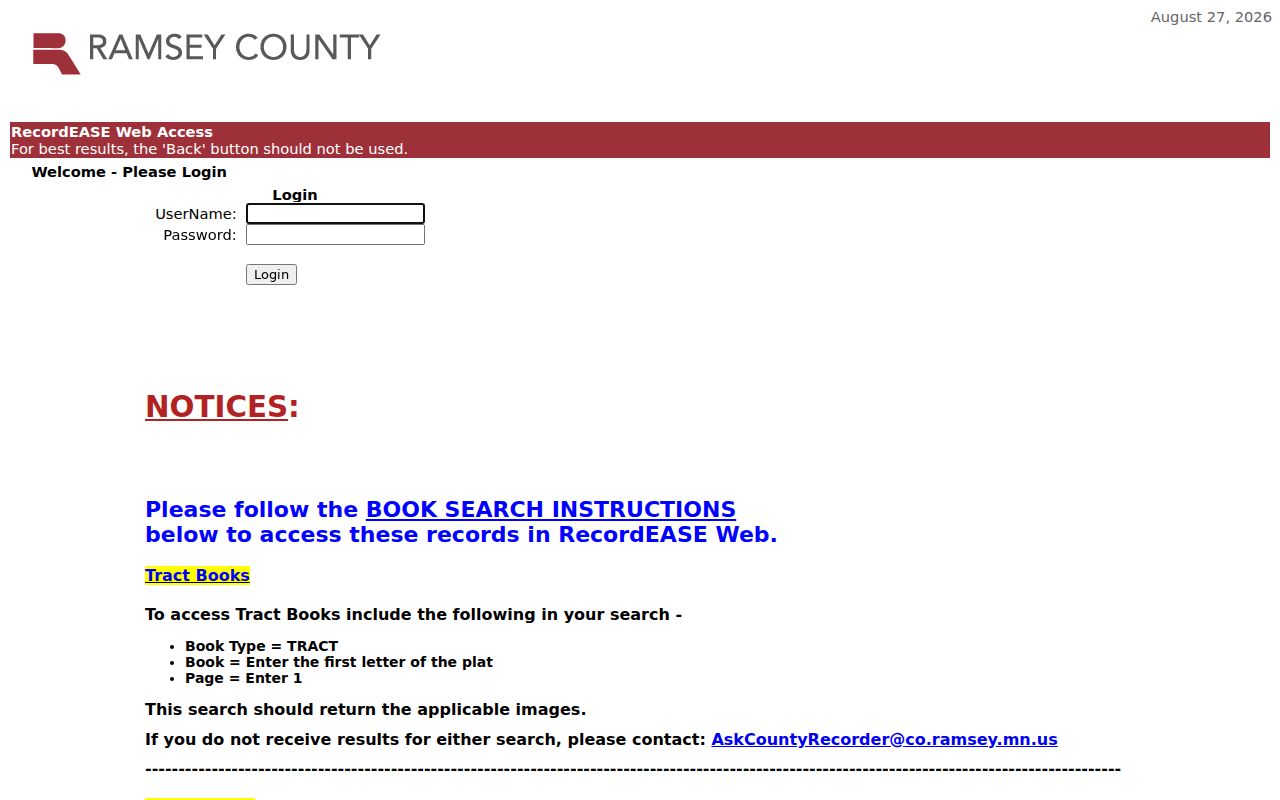
The RecordEASE access screen covers account and index-image access.
Note: Record the document number, date, party roles, and legal description so the next search can be reproduced.
Roseville Registration Checks
MNVotes is a free tool from the state. It confirms one registration rather than exposing every registered Roseville resident. The form asks for name, date of birth, and location details. These include ZIP, county, city, house number, street, and unit. Updates run nightly. Enter the name carefully. Diacritics and suffixes can be rejected exactly as typed. A normalized name with a complete address beats repeated broad attempts.
Minnesota law governs who may obtain the broader voter rolls. Minn. Stat. §201.091 restricts public voter-list material. Voters under a protective status can have identifying details withheld. Ramsey election maps and address tools help with precinct context today. An older street directory should never serve as proof of a current district. Open the MNVotes registration lookup with the exact identity data the form requires.
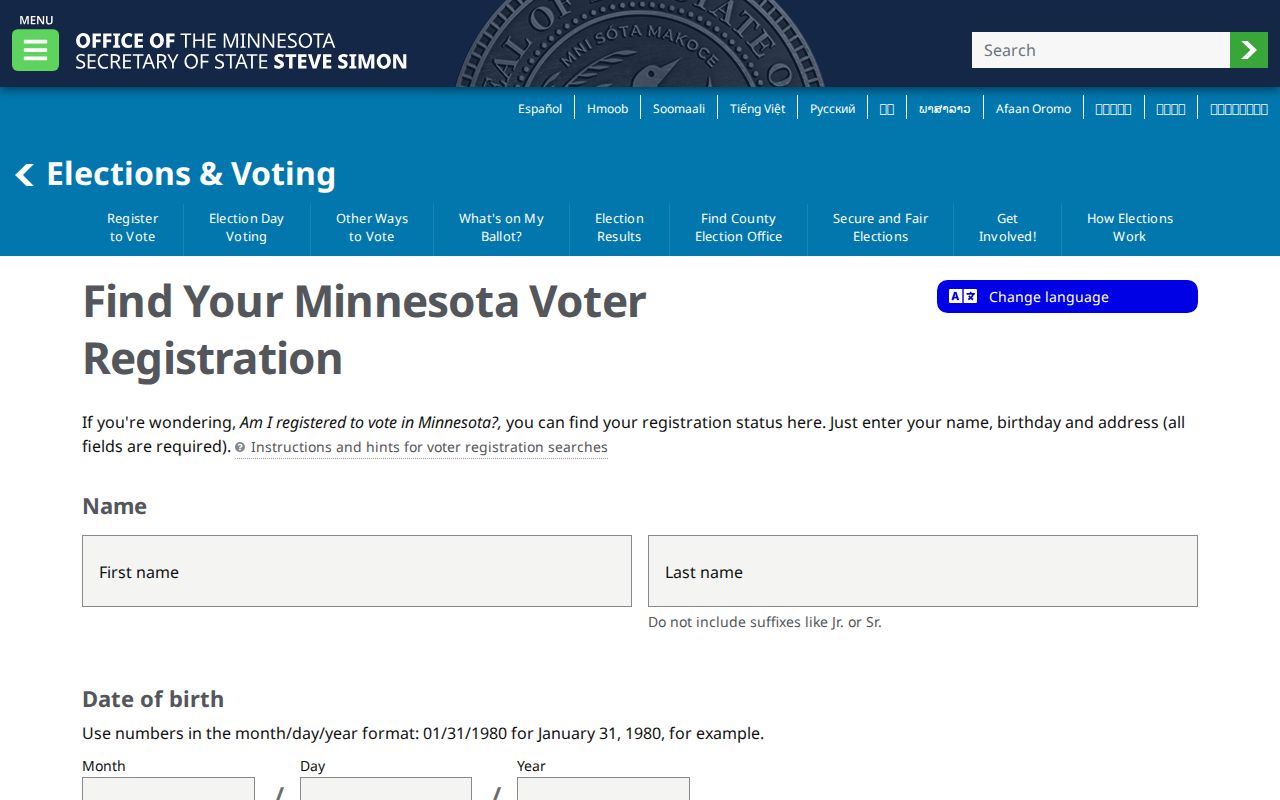
The confirmation form shows the problem plainly. A ZIP code alone is far too broad to pin down one person or one Roseville address.
Current Roseville Directories
Current directory-style sources each carry their own limits. Property records usually name owners, not every occupant. Recorder results list parties to land instruments. Courts and state license registers can confirm a case or credential, but neither counts as a resident roll. MNVotes confirms a single registration inside a restricted system. For one carefully identified person, the Roseville resident lookup path keeps each verification step separate and clean.
| Roseville source | What it can establish | Custodian | Access route |
|---|---|---|---|
| Beacon / MapRamsey | Parcel, owner, situs and mailing fields | Ramsey County | Public search and map |
| RecordEASE | Recorded parties and land instruments | Ramsey Recorder | Account/index and counter route |
| MNVotes | Limited registration confirmation | Minnesota Secretary of State | Exact identity and address entry |
| MCRO | Public court case and docket fields | Minnesota Courts | Web search or courthouse terminal |
| State license records | Public credential or business connection | Minnesota agencies | Agency-specific lookup |
Official records are scoped to a single public function, which is their strength. Commercial search categories can blend uncertain material from many places. A named county or state custodian, by contrast, gives you an access rule, a specific record type, and a way to check the result. The official route may be slower, but it is far easier to verify.
Roseville Court Leads
Minnesota Court Records Online is called MCRO. It lets anyone search by person or business name, attorney, case number, citation, or bar number. Case, document, hearing, and judgment searches sit in separate tools. A public result can include a case number, parties, category, and filing date. It may also list hearings, the Register of Actions, disposition, and any available document link. Start with exact names. Then try the portal's Sounds Like or wildcard tools for variants.
Web access is not the whole court record. Documents before July 1, 2015 have limited online availability. Older, restricted, sealed, juvenile, adoption, and confidential matters follow different access rules. Ramsey's Court Records Office and courthouse public terminals are the proper fallback. A docket result is not a criminal-history record. It should never support claims beyond what the official record actually says.
Roseville Vital Paths
Vital events demand more care than a simple name search. The Minnesota Department of Health runs the statewide birth and death system. Ramsey County Vital Records at 90 Plato Boulevard West issues local copies and routes marriage requests. Statewide births begin in 1900 and deaths in 1908. A birth record can be confidential under Minn. Stat. §144.225, though noncertified death records are broadly public under the stated rules. Certified copies carry their own eligibility, identity, and notarization requirements.
MOMS is a public index for marriages. It points you to the issuing county for a copy. Divorce decrees stay with the district court. These distinctions guard against a common mistake. An index hit or certificate request describes a limited record, never a complete biography. Use the Minnesota Vital Records office for product rules, forms, and county contacts.
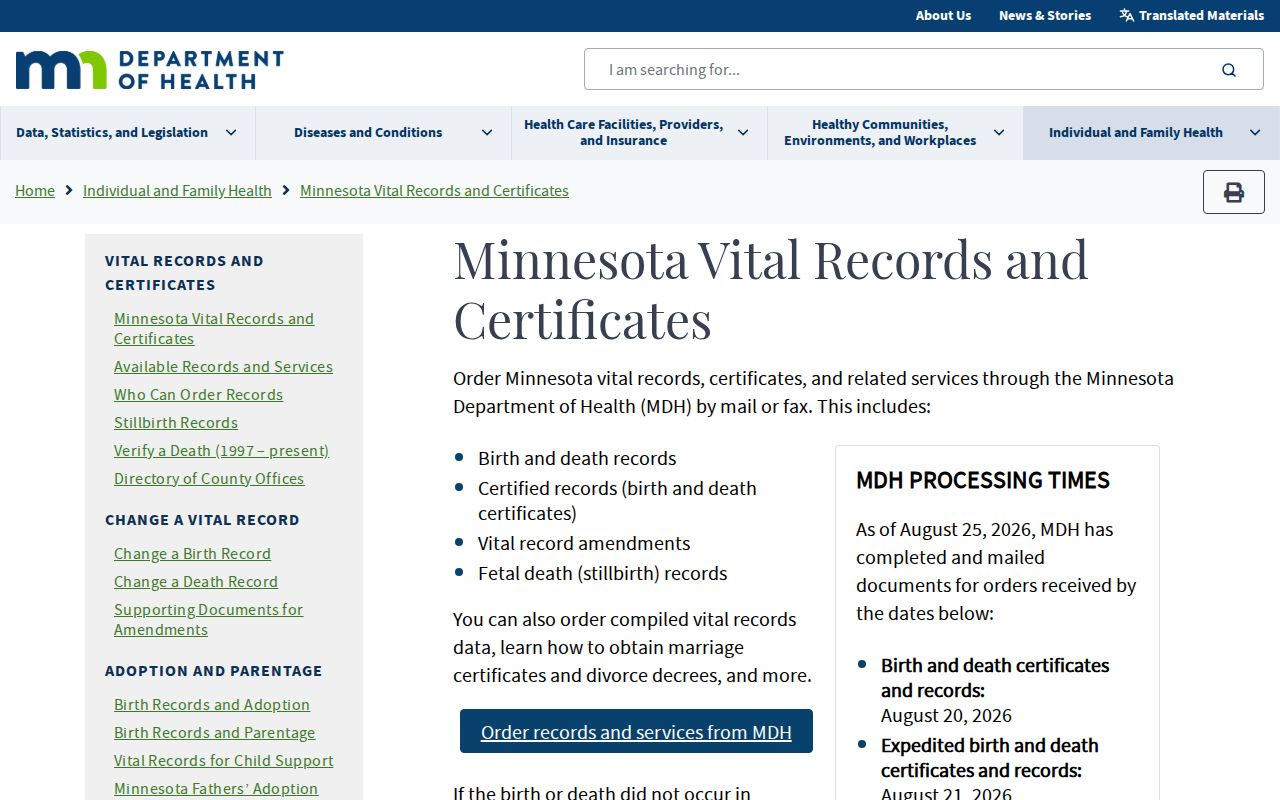
The state page is where a lawful copy request starts. The event type decides the county, court, or state route.
Roseville Custody Snapshots
The Ramsey County Adult Detention Center roster is a short-lived custody report. It is not a history file. The county says it updates every 30 minutes. Names remain listed for five days after release. The Minnesota Department of Corrections offers its own individual and fugitive search for state custody. The agencies, scope, and timing all differ. Read nothing into an absence from either list. View the county's adult detention information before relying on any roster entry.
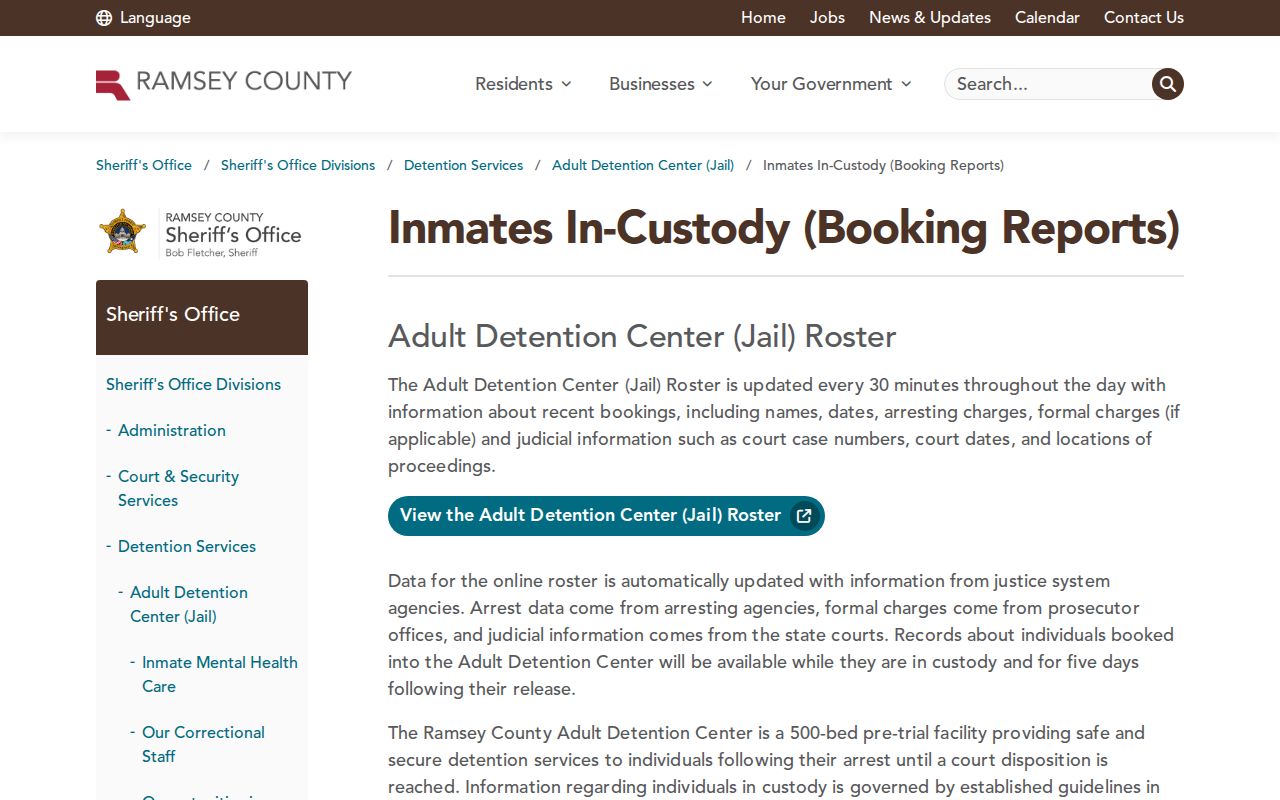
Those update and retention limits matter. They make the roster a time-specific check, not a long-term resident search.
Roseville ZIP Boundaries
Roseville spans ZIP codes 55112, 55113, and 55126. Those postal areas cross municipal lines. The Roseville Post Office itself carries a Saint Paul, Minnesota 55113 mailing address. So a postal city cannot settle whether an address sits inside Roseville city limits. Verify the address with USPS first. Then turn to MapRamsey or the city map collection for parcel and boundary context.
The wrinkle matters most with older records. An early source may say Saint Paul, Rose Township, or Roseville. Roseville was a village in 1948 and became a city in 1974. Early land records can carry Rose Township or early county labels. Search all of those plausible place terms before assuming a record trail has gone cold.
Roseville Offline Records
Online tools do not reach every Ramsey County record. When a portal comes up empty, the Minnesota Government Data Practices Act, Minn. Stat. ch. 13, offers another channel: a Data Practices request filed online or in writing. Inspecting public data is free. Your request should name the existing data and ask for inspection, copies, or both. The county builds no new dataset for a requester. It will not perform fresh analysis either. None of that puts the record out of reach, since court terminals, recorder microfilm, library shelves, and archive staff remain open routes into county records. For any county-held public record that never made it online, start at Ramsey County Data Practices requests.
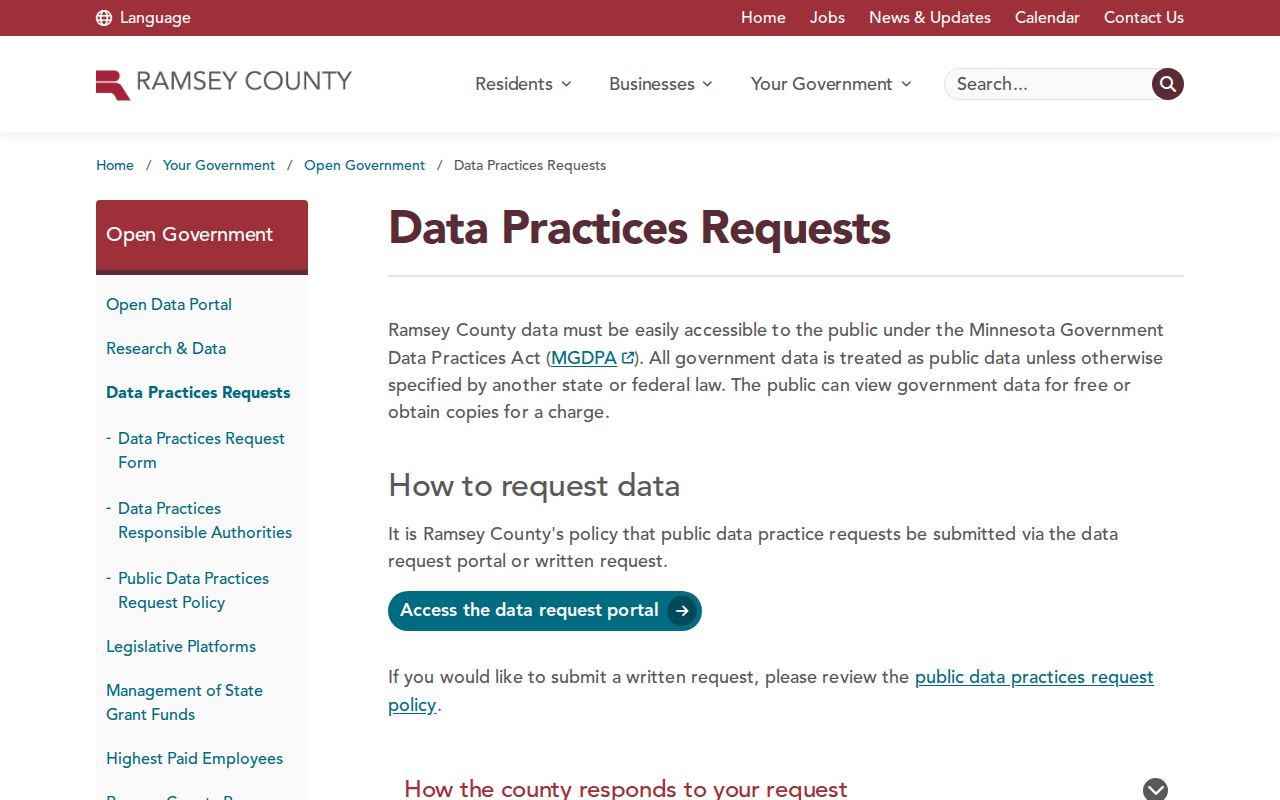
A request aimed at one existing record gets routed faster than a broad hunt for a person. Narrow beats sweeping.
Historical Roseville Directories
Old directories surface people that parcel rolls miss. Digitized St. Paul city directories span 1856 through 1922. Microfiche, microfilm, and print fill other runs. Selected suburban directories cover 1956 through 1991, though the annual Roseville run is incomplete. Ask staff before assuming a given year exists. The full collection and how to read it sit on the Roseville directory book page.
The Roseville Ramsey County Library supplies computers, scanning, copying, and a staffed service counter. The Roseville Historical Society, Ramsey County Historical Society, MNHS newspapers, the state census series, and the Ramsey Cemetery Project each add threads to a household trail. These layers extend family history where modern records stop. City packets and minutes live in the Roseville Archive Center. So do ordinances and other retained local records.
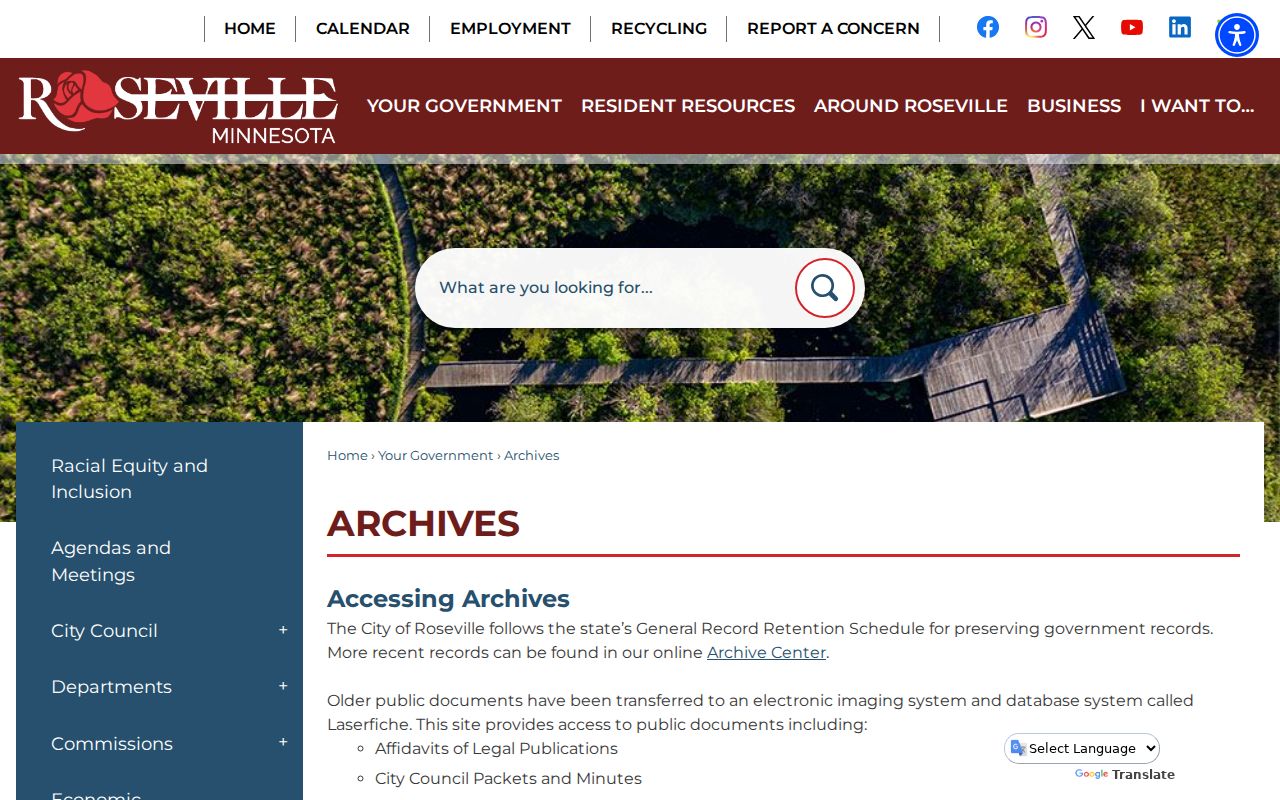
Word and phrase searches of the archive can document an appearance before a public body. The city keeps no public historic resident register.
Roseville Protected Addresses
Minnesota's Safe at Home program lets eligible participants list a designated address while their actual physical address stays confidential. The program's data classification sits in Minn. Stat. ch. 5B and §13.805. Rule and statutory changes taking effect in 2026 make it more important than ever to read a missing address as a possible protection rather than a gap to work around. Other records carry their own limits too. Voter information, vital records, juvenile and sealed court material, and DMV data all face restrictions under state or federal law.
Read the Safe at Home program information before assuming anything about an address that is absent or substituted.
Confidentiality belongs to the record system itself. Responsible research accepts the limits each custodian sets.