
Roseville City Directory Collections Across Time
Roseville does not have one verified annual city-directory run. The most useful shelf begins with the St. Paul Public Library city-directory collection, because early Roseville people and addresses can surface in the wider St. Paul material. This digitized Roseville research run covers 1856 through 1922. For Roseville research at Central Library, the physical collection is held as microfiche for 1856 through 1859, microfilm for 1863 through 1935, and print from 1938 forward. For Roseville researchers, the library also lists selected suburban directories from 1956 through 1991, but it does not promise that every Roseville year is present.
| Collection | Years | Where held | Access |
|---|---|---|---|
| St. Paul city directories, digitized | 1856-1922 | St. Paul Public Library digital collection | Free online browsing |
| St. Paul city directories, physical | 1856-1859; 1863-1935; 1938-present | Central Library | Microfiche, microfilm, then print |
| Selected suburban directories | 1956-1991 | St. Paul Public Library | Ask staff about a Roseville year |
| MNHS directory and telephone search | Variable | Minnesota Historical Society | Staff search and scan delivery |
For Roseville, the digitized city-directory collection is the quickest place to inspect the early run before arranging an in-person visit.
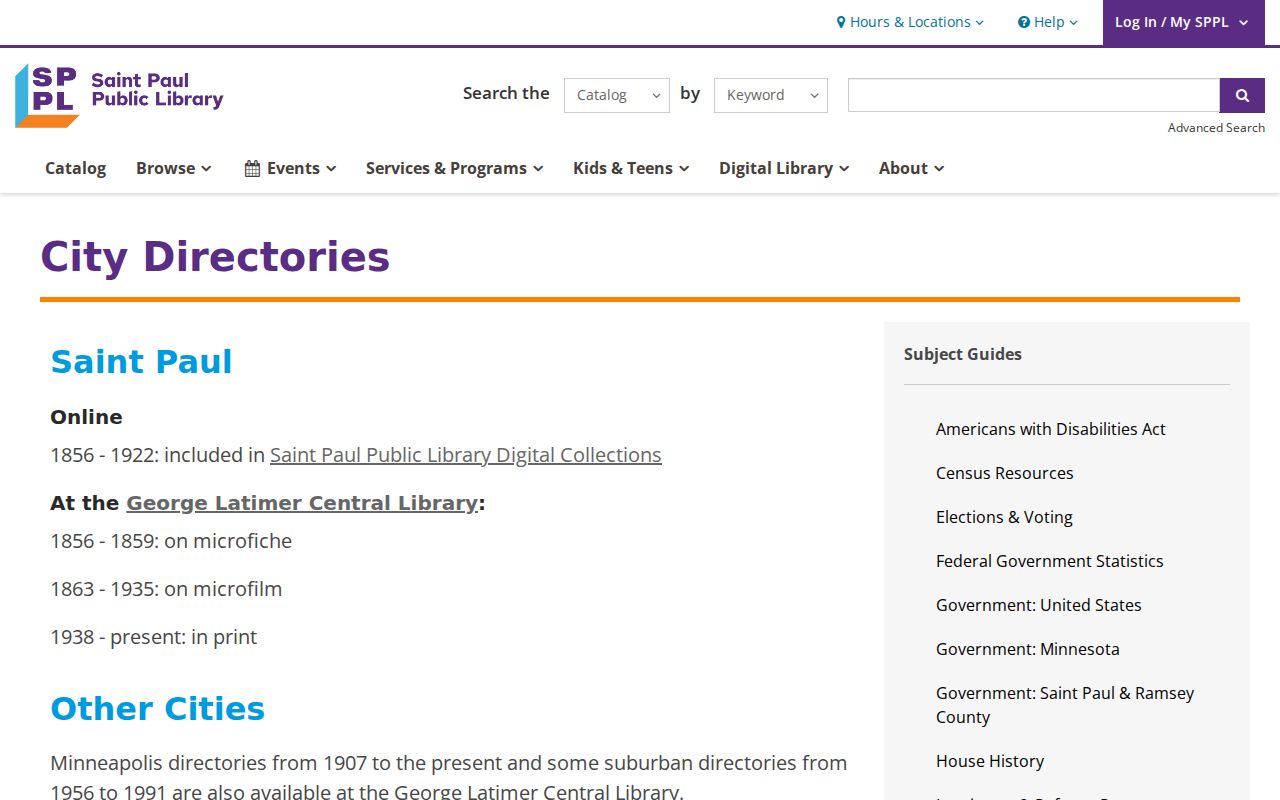
The collection screen helps distinguish a free online volume from a format that must be read at the library. Treat that distinction as part of the search plan, not as a dead end.
For a narrow Roseville name-and-year request, Minnesota Historical Society's directory search service accepts city directories, telephone books, or both. It searches one name or business in up to five years for one city. The research service describes a $20 charge, including a nonrefundable $5 processing component, and a usual response time of three to four weeks that can extend to 12 weeks. For Roseville, its limits matter: directory and telephone-book coverage is incomplete, household heads are common, and minors or short-term residents may never appear.
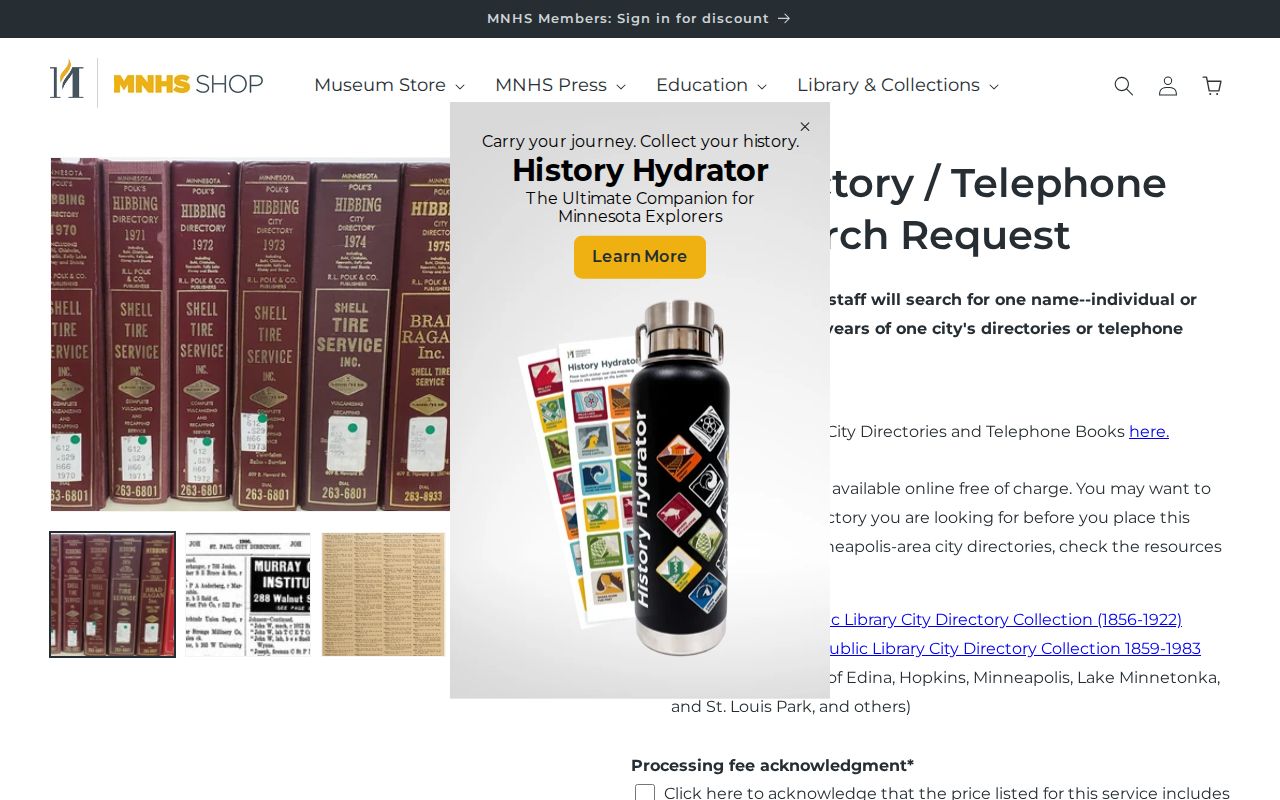
The request form is a practical fallback when a needed year is not in the digitized collection or on a local shelf.
Roseville Directory Shelves and Screens
Roseville Ramsey County Library is a practical local starting point for computer use, scanning, copying, and staff routing. The Roseville branch page does not list an exact genealogy room, city-directory shelf, obituary index, or microfilm run. Roseville researchers should ask staff about current local-history holdings before assuming a volume is on site. The deeper historical collection sits with St. Paul Public Library, while the Roseville branch can still help make a printed page, saved image, or note usable during a visit.
The Roseville library location page shows the branch services that support this kind of document work.
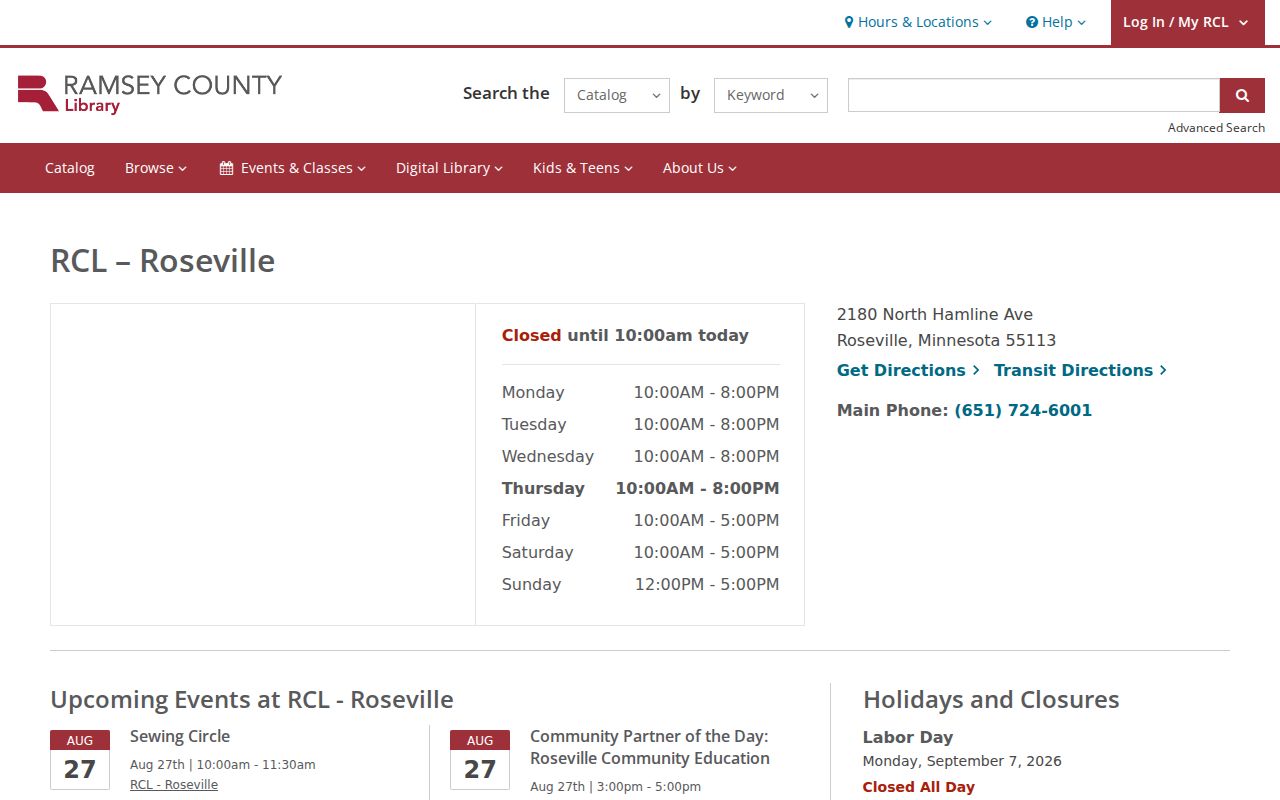
Roseville library staff can route a question, but the absence of a displayed directory title is not proof that no relevant resource exists. Roseville readers should confirm the year and format before making a trip.
Old Roseville research volumes may use an alphabetical list, a street list, advertisements, or a separate business section. Early street entries can lack house numbers. A later Roseville address from a deed or parcel record can therefore be useful, but it should not be pushed backward unchanged. For modern address-keyed records, use the Roseville street directory rather than treating an old listing as current evidence.
Reading a Roseville City Directory Entry
Copy a Roseville directory entry exactly before interpreting it. For Roseville entries, preserve initials, punctuation, spelling, parenthetical family notes, and the printed street form. Roseville listings can include a residence, occupation, employer or business, a telephone number, and a nearby business address. Older Roseville volumes may have only a street name. Later Roseville street-plus-number listings are more useful for joining a household to a parcel, but even then a listing is not proof of ownership or continuous residence.
| Name as printed | Retain initials, spelling, and punctuation before searching variants. |
|---|---|
| Family notation | A spouse or other household notation may appear in parentheses. |
| Occupation line | May name work, an employer, or a business address. |
| Residence | May be street-only in early volumes, then street plus number in later listings. |
| Page context | Record the page, section, and adjacent names that can identify a block. |
- Criss-cross directory
- A reverse section arranged by street and number, used to find a listed household from an address.
- Householder index
- An index centered on the adult household name, not a complete record of every person present.
- Abbreviation key
- The volume's explanation of shorthand marks. Photograph or copy it before assigning meaning to a mark.
From 1929, the library's house-history guidance says Roseville directory listings are organized by street and number. Earlier Roseville city directories need a different approach: inspect alphabetic entries, street-only lists, nearby names, and advertisements. Do not invent the meaning of an owner, renter, widow, or removal mark when the volume key is missing.
Roseville Directory Formats After 1929
Roseville directory format changes shape the evidence. Before Roseville house numbers became routine in a street listing, one address may be difficult to pin down even when the surname is present. Beginning with the 1929 street-and-number organization described by the house-history guide, a Roseville researcher can turn a known address into a household lead more directly. That Roseville lead still needs checking against the exact printed volume, because a street may have been recorded in an earlier form or under a broader postal place.
The MNHS request service is useful when a needed volume is not clearly digitized. State whether the request is for directories, telephone books, or both, and give the Roseville name, city, and chosen years. A staff search is a research route, not a guarantee that the collection has a listing.
Note: The official collection pages do not establish a complete Roseville-specific publisher sequence or an uninterrupted annual run.
Roseville Names Between Census Years
Pair a Roseville city directory with household schedules instead of relying on either source alone. For Roseville, federal population schedules are public through 1950 under the 72-year rule, and the National Archives census resources explain the available series. Roseville researchers can pair those records with Minnesota territorial censuses for 1849, 1850, 1853, 1855, and 1857, followed by state censuses in 1865, 1875, 1885, 1895, and 1905. The MNHS state-census search provides a free index and viewer for those state records.
The Minnesota state-census search is a useful bridge when a federal decade and a directory year do not line up.
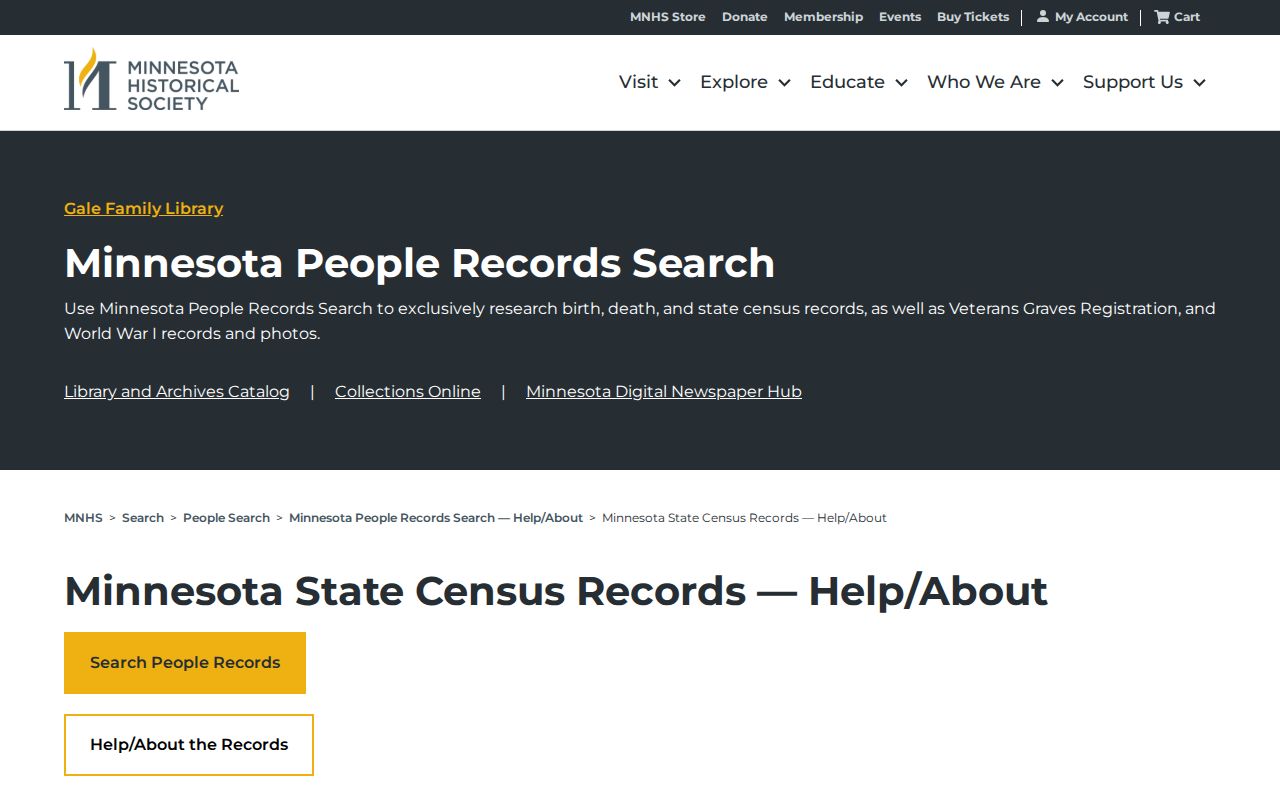
A census can add Roseville ages, birthplace, and household composition that the directory may leave out. It can also explain why one adult appears in print while other household members do not.
The Roseville 1890 federal-census gap is real, not a reason to assume a household vanished. Most schedules were destroyed in a 1921 Commerce Department fire, and no ordinary Roseville or Ramsey population schedule was identified. Minnesota's state-census series, newspapers, deeds, and directory years can narrow that missing decade without pretending to replace it.
Roseville Archives Preserve Neighborhood Lives
For Roseville, Ramsey County Historical Society archival collections add sources that ordinary city directories do not preserve. Its Roseville finding aids cover Roseville and Rose Township, families, churches, neighborhoods, schools, civic organizations, and businesses. For Roseville research, located examples include Arlington Hills Presbyterian material with membership directories from 1922 through 2008, American Legion Auxiliary directories, Cyril Bohemian and Czech Sunday-school attendance, and Arlington High School rosters and photographs. Access follows the finding aid and its restrictions, so a collection title is a lead rather than a claim that every name is open online.
The RCHS archival holdings index reveals the subject paths available beyond a standard directory volume.
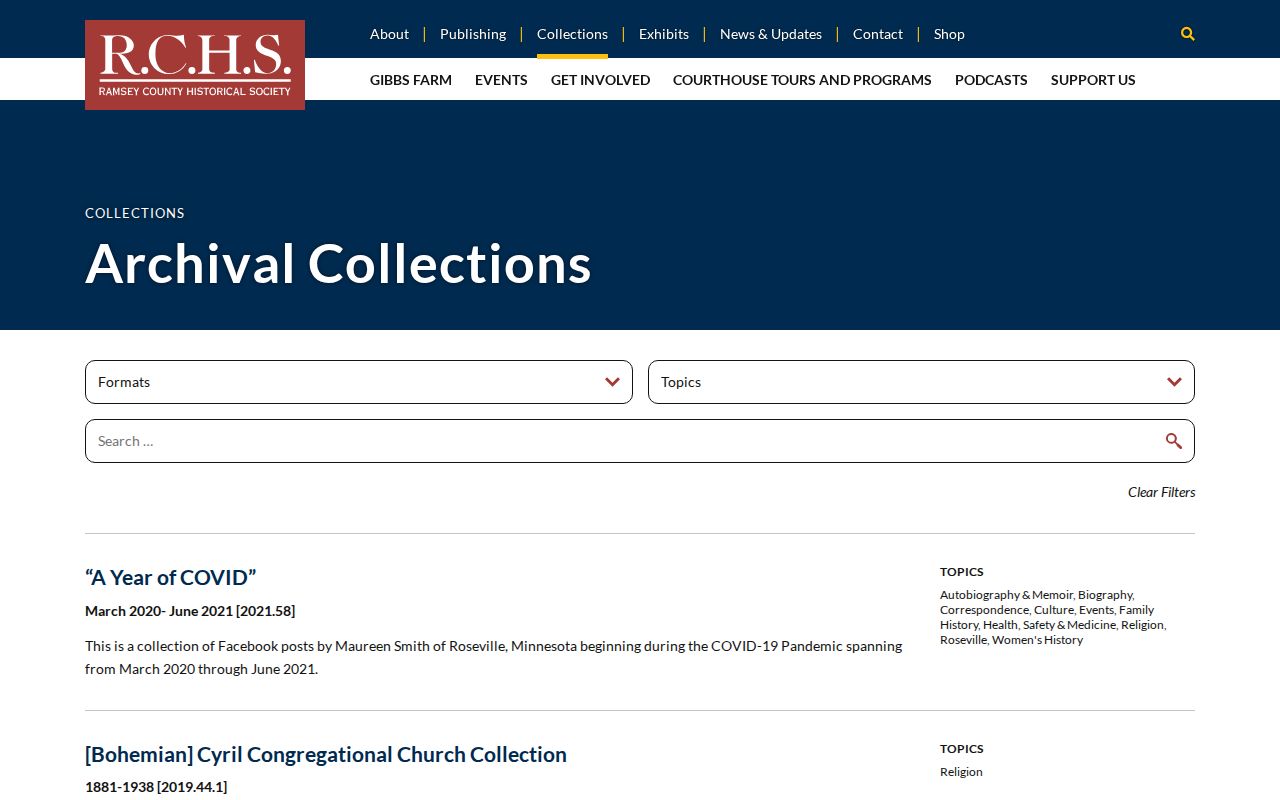
Those Roseville collection descriptions are especially helpful when a surname has no obvious city-directory match, because they point toward church, school, or civic material with a different filing system.
Roseville Historical Society offers a more local route. It was founded in 1977 and lists research hours at City Hall on Mondays from 11:00 to 3:00 and Wednesdays from noon to 3:00. Its stated work of preserving Roseville documents, artifacts, and local history makes it a sensible place to ask about local names, maps, and unpublished context.
The Roseville Historical Society research page identifies the local organization and its current research access route.
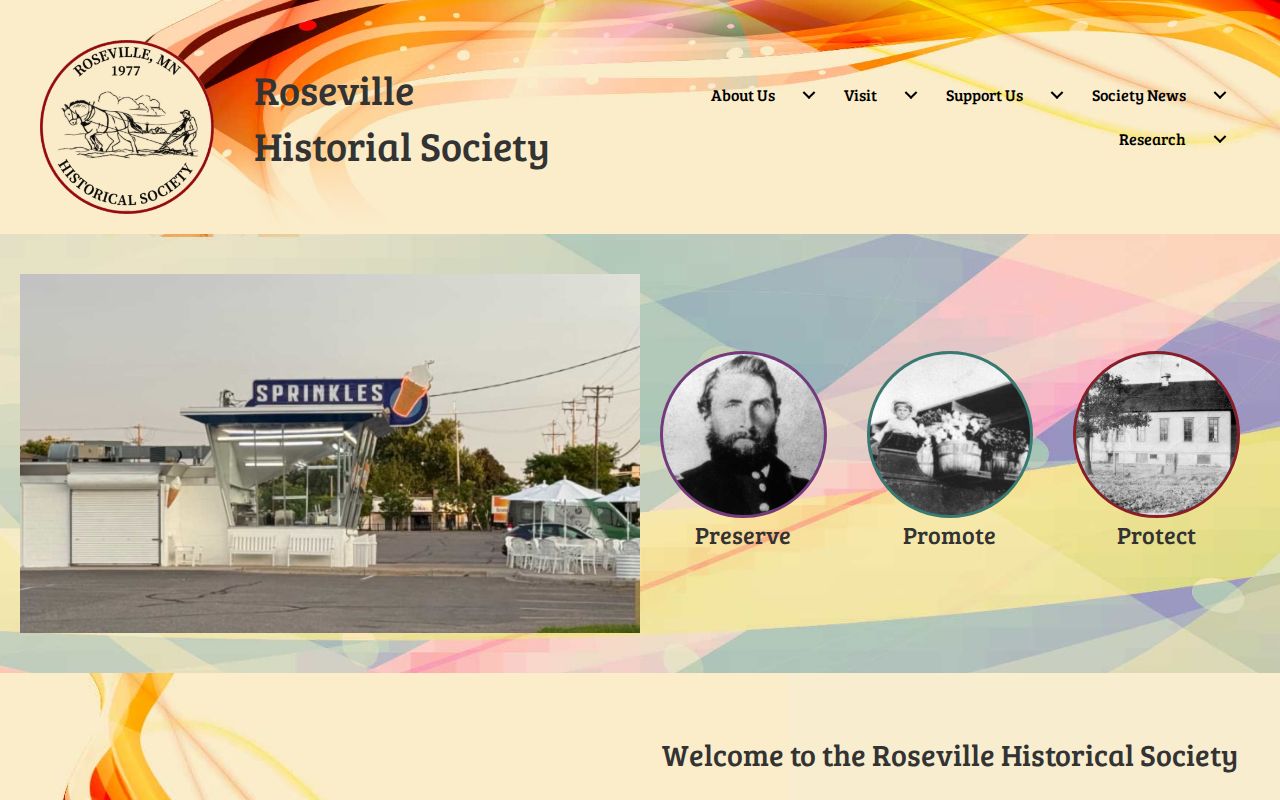
A local historical society may know the right collection number or map even when it does not publish a searchable resident index.
Roseville Records Saved by Local Hands
Roseville's record trail is layered. Ramsey County land records reach the 1840s, yet early material can name Rose Township, St. Croix County, or early Ramsey County instead of the modern city. Rose Township was established in 1850, Roseville village incorporation came in May 1948, and city status followed in 1974. The city map collection includes 1848 plats and a 1931 farm-map overlay, useful when an old legal description refuses to match a current street name.
A 2025 Roseville city account of local historian Beverly Kroschel describes early-1990s work to digitize Dale-Rice Cemetery records from grocery bags and index cards, along with efforts to preserve Roseville newspapers after a local newspaper-company closure. That Roseville preservation work is a practical reminder that historical evidence often survives in a society file, newspaper collection, or map archive rather than a single searchable database.
Tracing Roseville City Directory Households
A Roseville household trail works best when each search preserves what the old source actually says. Begin with one verified name or address, then move a year at a time around a relocation, marriage, death, or gap. A change in occupation, a new spouse notation, or a move mark is a reason to search farther. It is not proof by itself. When a historic address becomes a current property question, the legal description and parcel chain are stronger than a street name alone.
- Find the first likely entry and copy its spelling, address, occupation, page, and nearby names.
- Check the preceding and following directory years for a move, changed notation, or a new household head.
- Use a criss-cross or street section when the volume has one, then compare nearby entries without assuming they were relatives.
- Match the time span to federal and Minnesota state census years to test household composition.
- Use newspapers, cemetery material, deeds, probate, or permits to test an endpoint after the person leaves the listing.
Newspapers supply one of the strongest closing checks. The Minnesota Historical Society newspaper collection holds Minnesota papers from 1849 to the present, with 38 historical titles from 1858 through 1922 described as keyword searchable. Obituaries can name relatives, an address, a church, or a cemetery, but each detail should be checked against a primary record.
Roseville Directory Gaps and Cautions
City directories were selective publications, not a census. They often center adults who headed a household, and entries can omit minors, women in particular circumstances, renters, temporary residents, or anyone missed by a compiler. A city-directory absence therefore has several possible explanations. Check a spelling variant, a nearby year, a broader St. Paul or suburban volume, and a census or newspaper source before drawing a conclusion.
Historical volumes also need place-name care. A Rose Township reference can be the right lead for an address now in Roseville, while an old postal label may not match a current municipal boundary. The modern result should be verified with the custodian that holds the underlying record, especially when the search concerns family history, an estate, or an old property.